
Dr Ros McLellan, Senior Lecturer in Teacher Education & Development / Pedagogical Innovation, University of Cambridge, Faculty of Education
Parents and carers don’t need a psychologist to tell them that children are innately curious, and from a young age will seek to explore their environments and ask questions. Home-schooling gives parents and carers the opportunity to get involved with this more.
According to Self-Determination Theory we all have a natural disposition to develop and flourish whatever our age, but for this to happen, three core needs have to be met:
- Competence: Feeling effective when we interact with people, and experiencing opportunities to exercise and express our ideas, views and expertise.
- Autonomy: Feeling that we are the origin, and source, of our own behaviour.
- Relatedness: Feeling connected to others, caring for and being cared for by others, and having a sense of belonging both with other individuals and in our community.
So, to help young people to flourish, feel well and to be intrinsically motivated in their schoolwork, we have to think about whether these needs are being fulfilled. Are children being given activities that they feel competent with? Can they see themselves making progress? Do they feel like they are making choices for themselves? Do they feel others care?
This might sound like a daunting set of issues for anyone who doesn’t teach as their day job! But many parents and carers will meet these needs in children, in a less formal sense, every day. They will ask questions about what they are doing, praise progress while not criticising mistakes, and make it clear that those mistakes are part of learning – and that feeling frustrated is normal.
Parents and carers can also let children have choices in how to do things, and allow them a level of self-direction to follow their interests. And many, of course, already do show that they care and will be facilitating connections with friends and others through virtual learning.
The researchers Edward Deci and Richard Ryan sum this up as: Taking their perspective, encouraging initiation, supporting a sense of choice, and being responsive to their thoughts, questions and initiatives.
Any parent or carer can do that whatever their knowledge of the topics and activities their children are asked to undertake – and they may find the process a lot more fun than they imagined!
Tania Clarke, Vice-Chancellor & St Edmund’s College PhD Scholar, University of Cambridge (Psychology & Education), Young Carers Group Coordinator for Centre 33
As a researcher of educational psychology, for me this is a time of deep contemplation on what impact school closures will have on children nationwide. With the support of my supervisor (Dr Ros McLellan), I re-contextualise my doctorate research which investigates children’s wellbeing in relation to their academic achievement, now that many children are unable to attend school for the foreseeable future.
How can we begin to fathom the ripples of impact this global pandemic will have on our children’s psychological wellbeing? How will children adapt to the new ‘normal’ and what should adults be considering in order to nurture their mental wellbeing?
How to understand children’s wellbeing
Wellbeing can be understood from an educational psychology perspective as a subjective state of being that includes how a child feels (their ‘hedonic’ wellbeing) and how they function (their ‘eudaimonic’ wellbeing). While hedonic wellbeing is all about how children feel (the presence of positive feelings, absence of negative negative feelings and their overall satisfaction with their lives), eudaimonic wellbeing goes beyond this to consider how children think about their future lives and their individual potential (otherwise referred to as self-actualisation). These two aspects of wellbeing are distinct but overlapping, according to psychological research.
We might consider how children will feel in response to the pandemic: scared, anxious or confused. Thus, from a hedonic perspective, children’s wellbeing is likely to be affected. But when we consider what a lack of formal schooling means for children’s sense of purpose, fulfilment and future goals, the eudaimonic perspective appears equally important. Children might feel they have no goals to strive towards, now that exams have been cancelled and some may feel that their efforts have been all for nothing.
The situation for children in the UK
Clearly, the recent closure of UK schools for the foreseeable future will have serious ramifications not only for children’s learning and academic progress, but more importantly, for their wellbeing.
Schools, where children spend the majority of their waking hours, are hugely influential environments that can meet children’s core needs and facilitate positive wellbeing. School can provide children with a sense of belonging, feelings of self-competence and confidence, goals to work towards, routine and a myriad of opportunities to connect with peers informally.
One thing seems clear, even in the best possible home environments that are abundant in educational stimuli and resources, and with parents and remote teachers available to instil structure, this cannot replace the full range of experiences afforded by school. Moreover, the stark reality is that many disadvantaged children will find themselves in very different home environments than the best we can imagine. What these children will experience in lieu of normal school during the COVID-19 lockdown will vary enormously to those more fortunate.
Facilitating children’s core needs
Like Ros, I’ve also been contemplating how children’s wellbeing might be facilitated at home during the Covid-19 lockdown. Self-Determination Theory and its supporting evidence certainly serves as a useful tool for contemplating this. The theory suggests the three innate human needs of interpersonal relatedness, autonomy and competence require fulfilment in order for individuals to thrive and experience positive wellbeing.
But how might children’s experiences a home compared to school during the Covid-19 lockdown, and how might we keep their wellbeing needs in mind?
1. Interpersonal connectedness
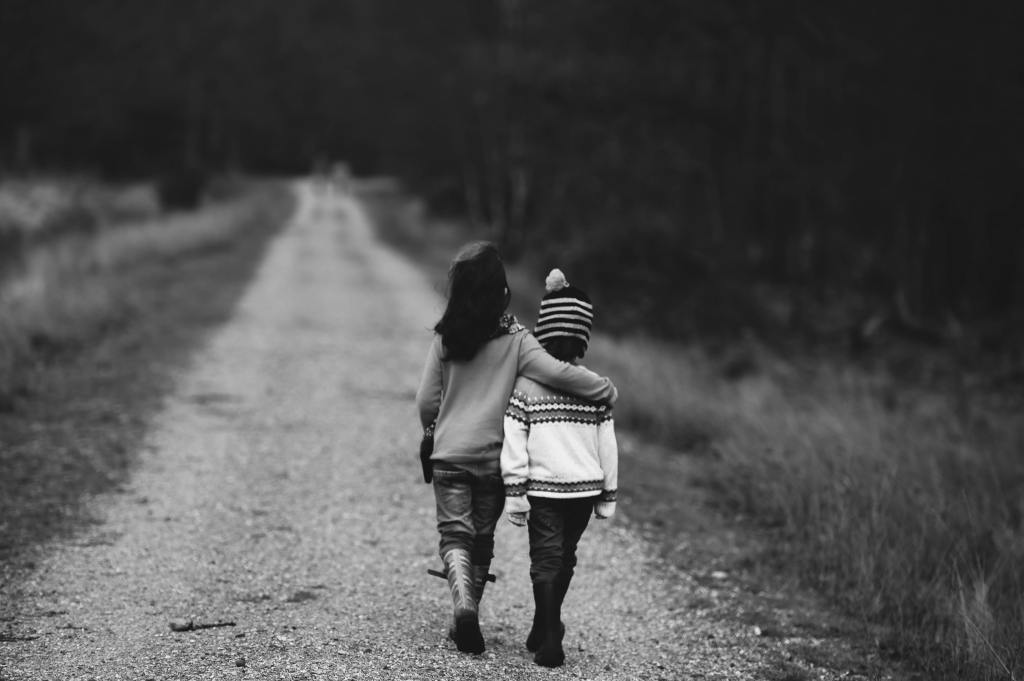
The innate need for interpersonal connectedness, that is, to relate to other humans, must transform into something new and be nurtured in alternative ways during social distancing measures, where children cannot meet friends face-to-face. School is an environment that facilitates friendships, forged through play, daily interactions and incidental chatting. Children, especially those without siblings in their home environment, may not interact with peers of a similar age at all during the lockdown. Once again, the most vulnerable children may be in households where there is a significant strain on familial relationships which puts them at risk.
Without a physical playground for children to meet, we must harness the affordances of technology. Finding ways for children to connect with their friends through monitored video calls scheduled in as ‘play dates’ throughout the day, can provide some sense of connectedness. Parents can also provide children with feelings of social cohesion and connectedness by taking time to talk to them about what is happening in the world, listen to their concerns and provide them with the opportunity to openly share their emotions.
2. Autonomy

The need for autonomy is felt even by adults, which we experience as eroding by the day as we face restrictions on our physical movements. Children need to feel they have some freedom; that their behaviours are somewhat driven by their own selves and not controlled by outside forces. Autonomy can be facilitated even within a structured environments. At school, teachers can facilitate children’s need for self-autonomy by matching their learning activities to their current level of ability in order to provide them with developmentally appropriate challenges.
Feelings of autonomy can be created for children at home if they are provided with opportunities to explore what interests them personally through freeform play, reading a book/magazine of their choosing, or providing them with a choice of different activities. Straightforwardly, children will feel autonomous if they have some say over what they do in any given day. Even young adolescents’ wellbeing can benefit from learning environments that are playful, though at school this is somewhat linked to their ability to connect with others, as my previous research has documented. Creating a home environment that foregrounds play, humour and exploration might be one way of promoting children’s wellbeing.
3. Competence

Last (but certainly not least) is children’s need to feel competent. Despite the pressures that are placed on them at school to achieve in exams, the ongoing feedback children receive on their learning progress at school can provide them with feelings of self-competence. At school, children may also have a favourite lesson that they feel they are good at and makes them feel capable.
Even in these challenging times, we can focus on children’s strengths? What are they good at? What can they achieve and aim towards today that gives makes them feel they have added value? Can they put on a dance show for the family after dinner? Can they follow a recipe acting as Head Chef while a sibling is the Mathematician and weighs out the ingredients? Can they invent and build something useful for the family from the household recycling? Building on this idea, engaging children in similar activities over the lockdown period and reflecting on how they have improved, or praising them for their efforts, may also promote feelings of self-competence.
Considering the whole child
These are unprecedented times for us all, including our children. Identifying what children’s wellbeing needs are and typical responses to trauma of this nature is paramount to helping them cope with COVID-19.
The potential deficits children may experience during this pandemic extend beyond their inability to learn planned academic content to how they feel about themselves, the present and future state of their lives and their friendships. There are important socio-emotional aspects of school that children will miss out on during the COVID-19 lockdown that should be contemplated. Though clearly this is no easy job, and not something parents can tackle alone.
Education must take on a new form outside the formal structure of ‘school as usual’. But when it comes to thinking about what this new form of education ought to prioritise during a time of national trauma, should we be providing what school offers children beyond purely the academic?
Dr Ros McLellan’s reflections were originally published in an article on the University of Cambridge official website, which can be read here: https://www.cam.ac.uk/stories/schools-in
Photo credits: Andrew Seaman, Annie Spratt, Josh Applegate & Caleb Woods, Unsplash (order of appearance)
 Cambridge Wellbeing & Inclusion SIG
2 thoughts on “Considering children’s wellbeing needs during the COVID-19 lockdown”