
The decision made by the government in England to begin a phased reopening of schools from the 1st June 2020 has concerned school leaders and councils, with parents equally worried about the safety of their children. Our Special Interest Group for Wellbeing and Inclusion – representing a range of interdisciplinary perspectives – discussed some of the key issues surrounding the transition back to school, which led us to produce this three-part blog series.
Each blog offers a range of perspectives from academic staff and doctoral students from Cambridge University, drawing on relevant research and theories in our respective fields, to disentangle what the return to school means for teachers, learners and schools as a whole, not only in England, but worldwide.
Part 2 features two different perspectives from education and inclusion, considering pupils with long-term health conditions (Rosanna Fennessy) and neurodiversity (Julie Bailey). Each contribution offers a response to the following questions:
‘What might be the key considerations for educators when supporting children to transition back to school following Covid? And how might schools best support children in a post-Covid lockdown world?’
The questions we face
What can we learn about returning to school from research with young people with long-term health conditions
Rosanna Fennessy, PhD Student (Psychology and Education), Faculty of Education, University of Cambridge, MSc (Occupational Health Psychology), MBPsS
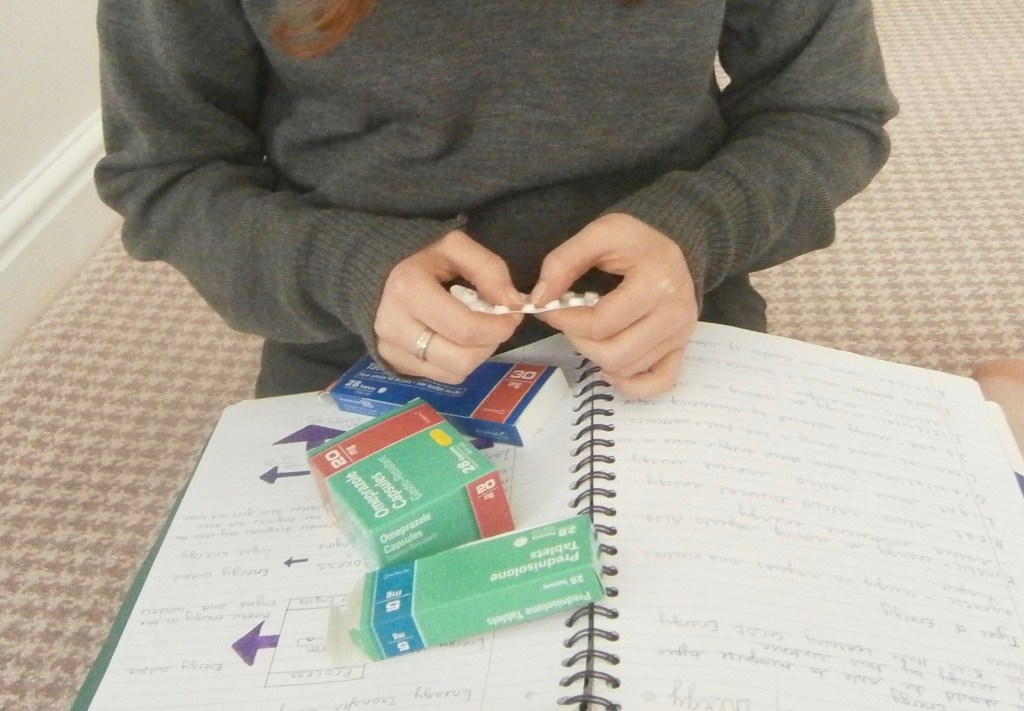
In my doctoral research, I look at the experience of education, social participation and wellbeing for young people with long-term physical health conditions. These conditions include diabetes, epilepsy, inflammatory bowel disease, alopecia and many more. Approximately 20% of young people study or work alongside learning to adapt to the physical, psychological and social disruptions caused by their health condition.[i] These disruptions can include substantial periods of time away from school and friends, not only because of the symptoms of their conditions, but also as a result of their treatments in hospital or the effects of their medications. As a result, young people can’t always participate educationally or socially, and for some, this results in worse school outcomes, feelings of isolation and poor emotional wellbeing.[ii],[iii] As we consider how to support the majority of our young people as they return to school after the lockdown period, research evidence from those with long-term health conditions offers some useful insights.
Balancing catching up with work and friends
Young people with long-term health conditions report that having an illness can have an impact on their emotional wellbeing as well as their physical health. A lack of control over their situation, disruptions to expected plans, and uncertainty about future health all affect the ability to focus on education. In my research with young people age 14+, many report significant levels of anxiety and stress when returning to school after a period of health-related absence. The pressures of trying to catch up on missed work and keep pace with peers, can feel overwhelming. Thinking about students returning to school after COVID-19, it will be important to consider their workload as they attempt to ‘make up’ for lost time. This might be particularly pertinent for those who face the additional stressors of external exams in the coming year. Linked to this, it is likely that after a period of absence, young people will also want to reconnect with their peers socially. Absence from friends has been shown to be particularly challenging for those with long-term conditions and this can sometimes be overlooked in the focus on academic work. Going forward, this suggests that despite social distancing requirements, opportunities to rebuild relationships with friends should be integrated into the school day.
Looking after emotional wellbeing
A further challenge of returning to school will be coping with the ongoing anxiety and stress related to COVID-19. For those with long-term health conditions this could be particularly challenging since some will have been at greater risk during the lockdown period. For this group it will be important that the young people themselves, or their parents, ensure that school staff are aware of any particular needs they may have. However, it is not just those with long-term conditions that will remain anxious because of the risk from the virus. Given these exceptional circumstances it will be important that school leaders focus on the emotional wellbeing of the whole school community.
One way to support this will be to foster a sense of belonging, since ‘school connectedness’ is positively associated with mental wellbeing for all pupils.[iv]The belief that teachers and other students care about each other is a key component of school connectedness. There is a robust body of evidence that demonstrates the importance of teachers as a source of support for young people with long-term conditions, not just with their academic work but also in terms of understanding and caring.[v] In my research, those with long-term conditions report that opportunities to share information and experience, for example through class talks or assemblies, helps to improve the school experience through feeling that others understand their situation. In this time of social distancing it may be difficult to bring the school community together en masse, but it will be important to build in opportunities for some forms of shared experience.
Continuing to support the vulnerable at home
Finally, it is worth noting that for many with long-term health conditions, the switch to online teaching during the pandemic is likely to have improved their ability to keep up with their education. In my research, students report that attempts to ‘stay on track’ while absent are problematic as systems to receive work at home can be ad hoc. Although everyone welcomes the return to face to face teaching, for some extremely vulnerable groups, there may be further delays in their return to school. Since they may have to remain absent for longer, it will be important that the excellent online resources created by staff during the pandemic continue to be available to support this vulnerable group
Celebrating and respecting diversity of experience
Julie Bailey, PhD Student (Psychology & Education) PhD Student, Faculty of Education, University of Cambridge and Chair (designate) of The Cavendish School Local Governing Body, Morris Education Trust
The pandemic has brought diversity and difference into focus for everyone involved in education. When we consider the features of children’s experience of this unusual time, some parallels emerge with the experience of autistic pupils – can we learn from the ways in which we support autistic pupils and anticipate the needs of all pupils as they return to school?
Firstly, pupils’ experience of their learning environments will vary greatly from each other. We don’t know what time of day or where pupils are completing their learning. We don’t know what’s going on around them. We don’t know how the tasks are being accessed and therefore the context in which pupils are making sense of the tasks. Different pupils can have a very different interpretation and understanding of the same task depending on the order the tasks are accessed or the assumptions they make about the objectives of the task. As pupils come back into school, we’ll need to avoid any assumptions about the work that pupils have completed during their time away from school and also assumptions about what kinds of learning task pupils may find easy or challenging as they adjust to working within school, just as we need to do for autistic pupils.
Secondly, returning to school may be a challenging and tiring sensory experience for many children. Even the simple act of putting on school uniform will be unfamiliar and, for many, uncomfortable. There will be many pupils who have been able to adapt their clothes and their surroundings to their needs and preferences whilst working at home, and who may take time to adjust to the different sounds and smells of school and the discomfort of wearing shoes all day. Like many autistic pupils, the additional effort involved in processing this sensory input may be very tiring.
Thirdly, the social world will be strange and unsettling for many pupils. The schools to which pupils return may have complex and novel rules for social interaction. There may be a difference between the formal rules of social interaction put in place by schools and the reality of the movements and interactions of the individuals. It may be very difficult for pupils to feel comfortable around others and they may find the behaviour of others confusing and contradictory. Care will need to be taken to be clear about rules and any areas of ambiguity. Initially, it might be useful to build in spaces and times for pupils to withdraw from interactions and read or work quietly in a comfortable space, using the same strategies as are often used to support autistic pupils feeling overwhelmed.
And finally, similarly to the experience of autistic pupils with a special interest, pupils may feel as if their areas of interest are not valued or accepted. For many children, the time spent on the formal learning tasks each day may have been significantly less than the time spent building a den in the garden, setting up a computer, exploring Minecraft, cooking, drawing or refining their own version of trampoline-tennis (a very popular sport in my house!). If the activities that dominate our time are not valued, how can we feel valued? So, as we return to schools, do we need to allow pupils the space to bring their interests with them? Can we perhaps learn more from listening to how pupils spent their free time at home than how they completed the tasks they were set by their teachers?
If we use the framework of diversity and inclusion to think about the ways in which pupils have experienced the period of school closure, we can learn from the best inclusive practice to guide the return to school and focus our priorities on the questions: Are we listening to the individual voices of our pupils? Are we understanding and respecting what they have to say? And, are we acknowledging and meeting their most urgent needs?
[i] Brooks, F., Magnusson, J., Klemera, E., Chester, K., Spencer, N., & Smeeton, N. (2015). HBSC England National Report 2014. Retrieved from Hatfield UK: http://www.hbscengland.com/wp-content/uploads/2015/10/National-Report-2015.pdf
[ii] Sawyer, S. M., Drew, S., Yeo, M. S., & Britto, M. T. (2007). Adolescents with a chronic condition: challenges living, challenges treating. The Lancet, 369(9571), 1481-1489. doi:10.1016/s0140-6736(07)60370-5
[iii] Maslow, G. R., Haydon, A., McRee, A.-L., Ford, C. A., & Halpern, C. T. (2011). Growing Up
With a Chronic Illness: Social Success, Educational/Vocational Distress. Journal of Adolescent Health, 49(2), 206-212. doi:http://dx.doi.org/10.1016/j.jadohealth.2010.12.001
[iv] Allen, K., & Bowles, T. (2012). Belonging as a guiding principle in the Education of Adolescents. Australian Journal of Educational and Developmental Psychology, 12, 108-119.
[v] Lightfoot, J., Wright, S., & Sloper, P. (1999). Supporting pupils in mainstream school with an illness or disability: young people’s views. Child Care Health Dev, 25(4), 267-284. doi:10.1046/j.1365-2214.1999.00112.x
 Cambridge Wellbeing & Inclusion SIG