

Ruth Platt, Early Years Teacher, Assistant Head, Educational Consultant and Med Student at Cambridge University’s Faculty of Education and Tania Clarke, SIG Co-ordinator and PhD student. They both met following the publication of a recent article Tania wrote in Theory and Research in Education: Children’s wellbeing and their academic achievement: the dangerous discourse of trade-offs in education to discuss wellbeing in schools from Ruth’s perspective as an Early Years Practitioner.
How does pupils’ wellbeing feature in the UK’s Early Years curriculum and educational approach?
As an early years’ teacher, I have felt grateful that the Early Years Foundation Stage (EYFS) curriculum has children’s wellbeing at the heart of its philosophy and approach. The Early Years curriculum is underpinned by three themes which inform our practice and are embedded in the culture of early years settings. The themes are a unique child, positive relationships and enabling environments; together these acts as recognition that a child’s wellbeing is central to their learning experience. These themes guide our approach to the transition into primary school, beginning in the summer term with a carefully planned programme of events.
Meetings about the children and visits from the class teacher to nurseries are arranged, families and children are invited to ‘stay and play’ sessions where they can familiarise themselves with the school environment and meet the class teacher. The purpose of these events is to enable the children to begin to create a sense of safety and belonging in preparation for the new school year. In September, we conduct home visits to establish a genuine understanding of each child’s unique family. Children are also welcomed into the classroom in small groups which include some of their friends. During these half-day sessions, we have the luxury of time and space to establish a positive relationship with each child. We observe the children develop a sense of belonging in their new space. By late September, the children are in school full-time, settled and eager to learn. This carefully planned approach is designed with the shared understanding that children’s wellbeing is essential if they are going to thrive.
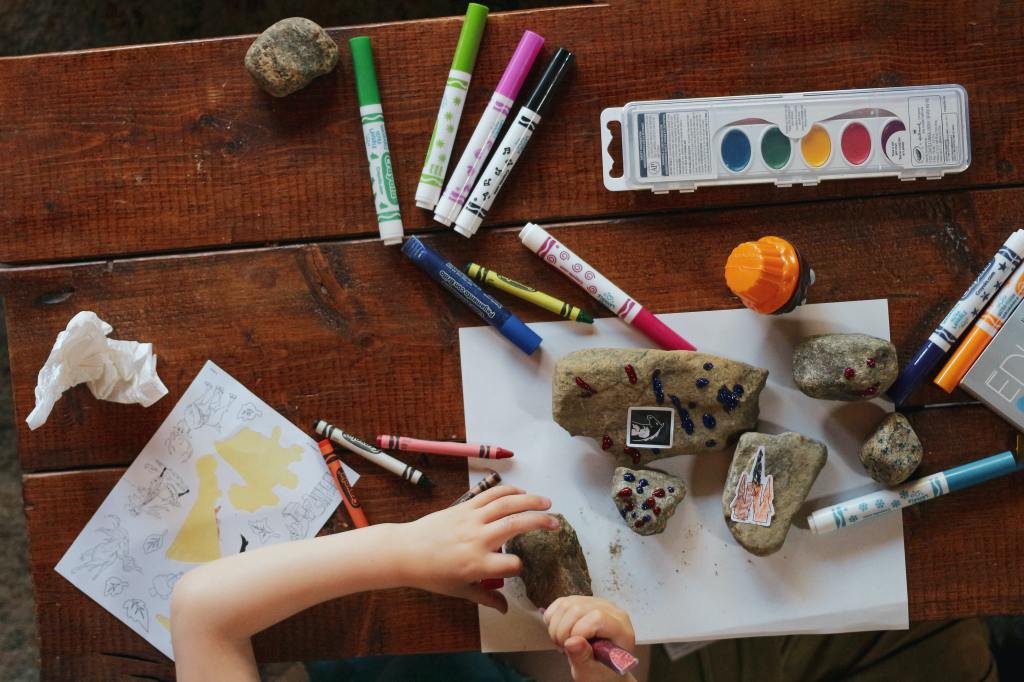
One of the joys of being an Early Years teacher is feeling that the curriculum has a degree of flexibility and is designed to educate the whole child in an age-appropriate manner. Wherever each child may be developmentally, there are opportunities for us to scaffold their learning and address misconceptions. There is time to flexibly revisit new concepts and ensure children never feel that they are out of their depth. There is also time for children to embed their learning in a play-based context which has been carefully designed to support their exploration of ideas and social interactions in an unhurried manner. When I use praise to express my delight in both their cognitive and social learning, children develop a positive learner identity and my relationship with them grows stronger: the children’s wellbeing is my priority as I plan for their next steps and set up the learning environment: providing possibilities for growth and development.
What aspects of the Early Years approach might have broader relevance for Primary and Secondary level education post-lockdown?
As all children transition back into school following the current lockdown, the themes that inform our Early Years practice have widespread relevance in terms of children’s wellbeing.
Each child will have had their own unique experience. As we know from the first lockdown, the learning losses pupils will have experienced will vary greatly. Using the unique child theme to guide them, primary and secondary teachers could take time to assess and understand where children are, both emotionally and academically, before plunging back into the usual timetable of academia.
Positive relationships will need to be re-established as children adjust to being back in the physical presence of their teacher and re-united with their friends. Children may need to adjust to being separated from parents; although some will be delighted to have time away from family and home, others may find it hard.
Enabling environments with rich, creative learning opportunities will help children to transition back into the new normal of school post lockdown. Although there may be a perceived urgency to make up for time lost, this could be an opportunity for schools to revaluate the curriculum and explore how children’s wellbeing can be prioritised through subjects such as personal, social and health education (PSHE). School leaders might encourage activities such as circle time to become integral to classroom practice rather than as an add-on, so readily squeezed out of an overcrowded curriculum.

What do you perceive to be the main barriers to schools adopting an Early Years approach to children’s wellbeing for the education of all school-aged pupils?
The barriers to schools adopting an Early Years approach are multidimensional and complex. Lack of time, staff training, performance-related pay and an over-full curriculum, combined with an absence of a shared understanding of the principles underpinning children’s wellbeing all play a role. School culture and core values will also affect a school’s willingness to adopt the Early Years approach across the board.
Pressure to improve school data may be another barrier for some schools, requiring teachers to focus less on wellbeing and more on academic attainment. Additionally, inexperienced teachers may feel that they lack the skills required to address the Early Years themes, and staff training sessions on wellbeing may not be readily available.
For the Early Years approach to be truly successful in a wider context, the whole school community needs be given the opportunity – and freedom – by the school leadership team to develop a deeper understanding of the EYFS philosophy combined with encouragement and support to implement it.
Moving from a place of shared recognition that children’s wellbeing should be at the heart of education, schools could develop and adapt existing transition principles and incorporate the EYFS themes (a unique child, positive relationships and enabling environments) when planning for the full return to school post lockdown.
 Cambridge Wellbeing & Inclusion SIG