
Andrie Savva, PhD Candidate, University of Cambridge; Simon Glenister, Founder and CEO Noise Solution CIC & Portia Ungley, EdD researcher on play and rigour in HE, yoga teacher, Raw Light academic and creative retreat founder, former associate professor
The currency of our times is often linked with decreased wellbeing. This ascertainment has lead to a continuously increasing body of research connecting wellbeing and arts. This post aims to foster a dialogue on how we can enhance wellbeing with students bringing together different aspects whilst trying to maintain a balance between on- and off- screen engagement. Three SIG members, Andrie Savva, Simon Glenister, and Portia Ungley discuss how arts-based approaches might enhance wellbeing. My contribution focuses on ways that the third place and the arts might enhance wellbeing with children. Simon’s contribution presents self-determination informed approaches to digital youthwork through music to improve, capture and analyse wellbeing. Portia’s aspect highlights presence and play in the learning space and focuses on Higher Education. Third place-space and the arts are the thread that runs through this post.
Enhancing wellbeing with children: third place and the arts, Andrie Savva
PhD candidate, Cambridge University
Nearly two decades ago, Ray Oldenburg stemming from a sociological perspective discussed the notion of ‘third place’, an informal community space between home and workplace where anyone feels at ease to engage with anyone. As a “collective ritual” (2), third places substitute competition, loneliness, stress, boredom, alienation, enhance interest, confidence, competence, fun, multiplicity, and expression. They level any status; for instance, children and adults engage together in a way that children are not perceived as restricting the activities of adults (p. 265-280). Oldenburg discusses sidewalk cafés, parks, squares, among few, as essential for democracy and relationships. Although this scholarship was developed some time ago, I find the notion of ‘third place’ diachronic and extremely useful for this blogpost.
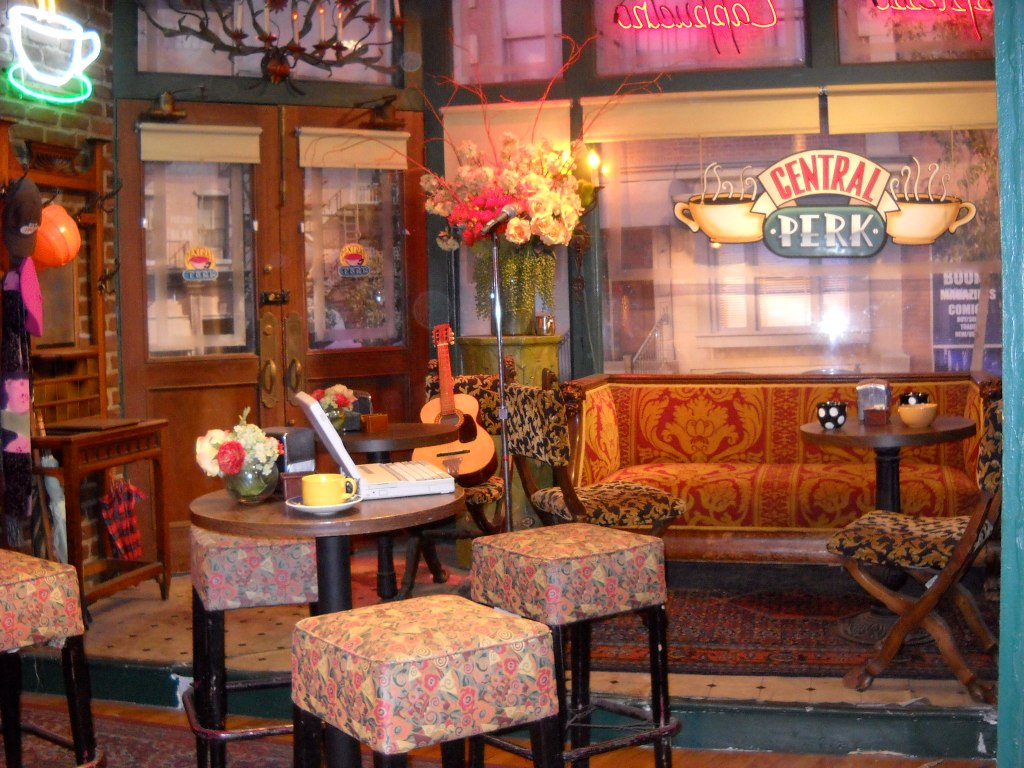
Third places exude warmth, conviviality, liveliness, playfulness, acceptance, joy, immediacy. Through face-to-face informal and unplanned conversation people associate, relax, cultivate and enjoy a sense of belonging. Games that invite conversation instead of individualisation emerge from the plexus of third place. As “a habitat that encourages association” (3), a shared responsibility for constructing this informal communal space is crucial.
‘Third space’ explicates the virtual third place. Conversation, humour, and play are emphasized in third spaces, albeit criticism regarding the delocalized and simulation-based communication, highlighting lack of warmth (4). On the other hand, research on virtual communities such as Minecraft show the complexity of a collaborative virtual space through the children’s spontaneous performative singing (5).
Third places and spaces are entwined with the sense of belonging, and as such they are inextricably linked with wellbeing. Wellbeing is enhanced through facets emboldened by the arts, such as engagement, creativity, and interpersonal connectedness (6). For the purposes of this post, wellbeing is approached as a holistic phenomenon that considers processes enabling pleasure, relatedness, competence, happiness, and meaningfulness, and how these might be enhanced by drawing on the notions of third place, space, and the arts.
Firstly, you could agree on a nook in your space where no work- or home- related issues will be discussed. This nook’s sense of homeliness can be enhanced with very small, modest acts, if you see fit.
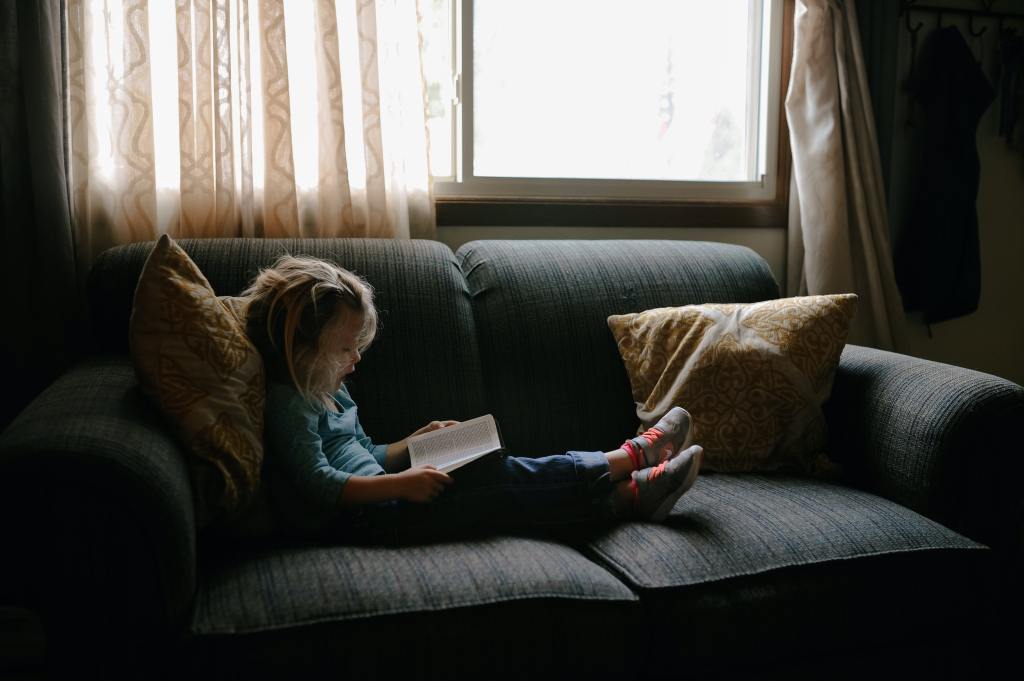
Photo by Josh Applegate on Unsplash
From a pedagogical perspective, literature suggests activities that are pleasurable and meaningful. Gianni Rodari, the famous pedagogue and author, in his seminal book Grammar of Fantasy (1996) discusses techniques that celebrate inventive play, imagination, creativity, and fun, such as word-games, limericks and riddles. Fairy-tales have an immense potential for freedom and transformation. Building on the functions of folk-tales analyzed by Vladimir Propp and on work with children in Reggio Emilia, Rodari suggests the deck of cards. Each card is marked and illustrated with a function, such as “departure of the hero”, “difficult tasks”, “magical gifts”, “punishment of the antagonist”, “victory” (p. 47). Rodari played with the children, mixing the cards and improvising. If you are enamoured by the world of fairy-tales and play, then why not create your deck of cards and create your own fairy-tale? You could write, draw, sing it, dance it out!
The importance of objects and senses in inventive play is stressed by Rodari among others. Three random objects (a pan, a pair of shoes, a broom) can be part of creating and acting a whole story, whereas a ‘mystery box’ hiding objects can trigger senses and stimulate imagination. Smell as an experience and a symbol, triggers individually and culturally particular associations (8). Similarly, the tactile sense triggers intimacy related to the active exploration of objects and associated with previously experienced tactile sensations (9). These sensations could be warm and soft; the scent of ginger may be associated with winter holidays, whereas the soft touch of a scarf may remind us of a loved one. Why not create your own ‘mystery box’ filled with objects that trigger senses? You could fold your game-buddy’s eyes and invite them to explore with their senses, guess, imagine and create. A bar of chocolate, a lemon, a knitted hat, invite a multisensory experience that exceeds the written and the oculacentric and open a window to imaginative creations.
Philosophical explorations with children when combined with literature and art can stimulate meaningful discussions. Reading a novel or a picturebook can generate philosophical discussions such as ‘what does it mean to be a friend?’, attend to matters of interest and function in a therapeutic way (10; 11). This kind of bonding may suggest the elucidation of trust and open a space of freedom, care, and listening. It also suggests accepting that beliefs are contestable and perplexed.
Art has been discussed as socially engaged practice, as creative art-making, and as connected with post-digital craftivist approaches. It opens-up to freedom, creativity, expression, and exploration with various materials and techniques. You could curate a “cabinet of curiosities”(12) and experiment with collage, by engaging in a process of collection, exploration, transformation, composition, and attachment. Materials carry associations that emerge in the process and in the completed artifact. Any material would do; a plastic bag, a can, gain a new perspective in an artistic process (13). More than collage, how could these plain materials take a new form in a new context, such as a game-board?
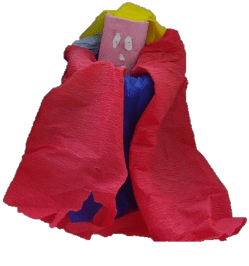
An 8-years old creation: Queen (inspired by a fairy-tale) with random materials
If you are fascinated by graffiti, you could express ideas, concerns, feelings in your third space. Although graffiti is usually connected with urban studies and museum installations, the link between the social aspects of architecture and art and the artistic creative process mark graffiti as a ritual connected with freedom and expression (14). Graffiti can function as a bonding activity and can enhance creation, personalisation, and belonging.
Music is inextricably linked with wellbeing. Simon Glenister outlines Noise Solution’s approach and impact in empowering youth.
Self Determination informed approaches to Digital youthwork to improve, capture and analyse well-being, Simon Glenister
Founder CEO Noise Solution CIC
Work completed by myself at the Education Faculty (Completing an MEd, under the supervision of Dr Pam Burnard) has had a significant impact upon the organisation Noise Solution. This Social Enterprise is one of the UK’s top performing (NatWest SE100) and it exists to support youth in challenging circumstances. The programme is focused on providing one-to-one mentoring, informed by Self Determination Theory (15; 16) through music and music technology. For 30 years, Deci and Ryan have developed an empirically evidenced theory called SDT that identifies three key psychological needs that must be met for well-being and motivation to flourish. The first is autonomy, which related to the feeling in control of one’s circumstances. The second is competency which is the extent to which we feel we are good at something and lastly, relatedness to others. It is arguably one of the best evidenced roadmaps for understanding ‘how’ to impact on wellbeing and motivation.
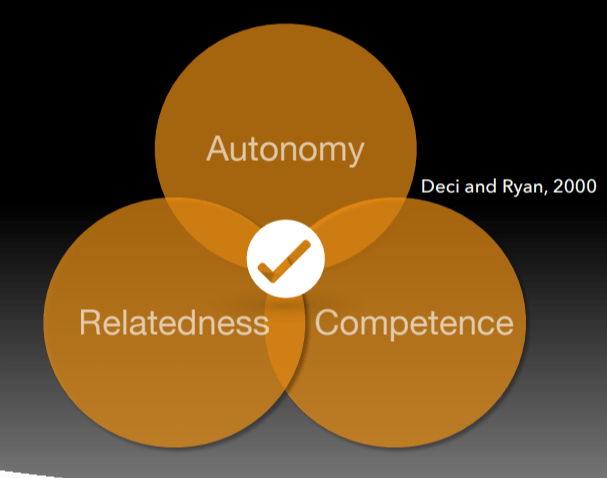
In alignment with SDT, Noise Solution seeks to encourage participant autonomy, competence, relatedness as a route to enabling well-being and motivation to support young people in flourish. Central to the approach is the digital capture by participants in a closed social media-like environment of their journey through the programme. These digital stories can be shared with and commented on by trusted family and professional keyworkers and it is this feedback that is an important mechanism of enhancing wellbeing. The music technology-based mentoring on the programme has been delivered face-to-face, and or online – being adapted during COVID and to date over 1700 hours of interactive mentoring has been delivered. My masters research at the faculty significantly contributed to the development of Noise Solution’s cloud-based approach in capturing and analysing its impact in supporting the wellbeing of young people. The digitally capture of data from the digital story telling components of the programme include text, audio and video. Contextual data is also gathered along with before and after mentoring wellbeing surveys (based on Warwick-Edinburgh Mental Wellbeing Scales). Collectively this data allows for almost real-time monitoring of participant progress through the programme and creates a rich and extensive mixed method dataset for impact evaluation. Thus far, the programme has seen improvements in wellbeing with those who participate and an increase in re-engagement with education or voluntary or work progressions over a year for some young people.
Presence and play are of immense importance when considering wellbeing. Portia Ungley discusses these aspects in the learning space focusing on HE.
Presence and Play in the Learning Space, Portia Ungley
EdD researcher on play and rigour in HE, yoga teacher, Raw Light academic and creative retreat founder, former associate professor
If you ask a master’s student to start a session with mindfulness, there is often pushback – What has that got to do with the business of my education? Where is the academic contribution? I’ve worked out how much each hour of your time costs me, why would I waste it on this rubbish? Teach me!
This attitude echoes a misapprehension that learning is only content focused and subject based, and that the experience of HE is peripheral to the course undertaken. However, when such reluctance is dissipated and research showing the power of taking time out in your studies is shown, a remarkable and transformative effect can be measured. In my retreats, starting a day with 30 mins of yoga, or simple breathing exercises leads to a calmer and more productive environment. Bringing non-outcome focused, unproductive and silly play activities into the learning space has a positive impact on the serious business of learning. The problem is being fun on demand is almost impossible and arts-based methods, from making models to creating found poetry via creating the Surrealists’ ‘exquisite corpses’ can allow the freedom to play – to be present in the moment – which is also the goal of introducing mindfulness practices.
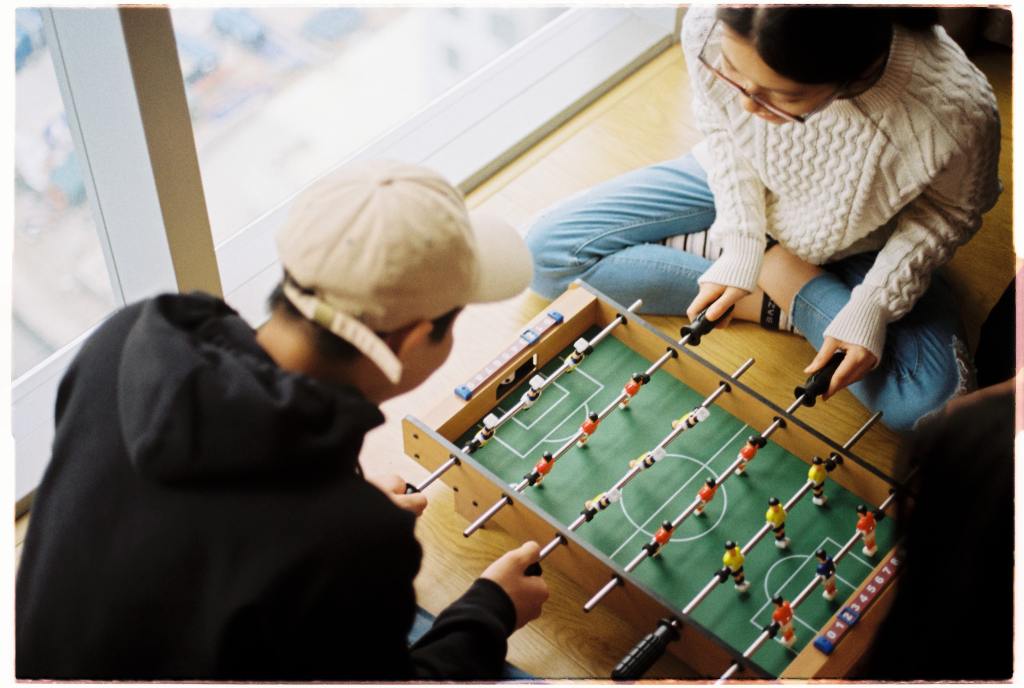
Boundaries are important to feel secure, while a lack of goal-based outcome releases the pressure to succeed. All of these activities are predicated on the notion of the learning space being safe as a first stop – designing alliances, acknowledging etiquette – but for their success they are also brave spaces, where risks can be taken and failure is possible but not judged as negative.
Arts-based techniques aligned with presence contributes to achievement at one level, but more so creates brave learning spaces where the learning experience is considered holistically, beyond results. Fundamentally, this contributes to student wellbeing *.
This post aims to foster a dialogue on how we can enhance wellbeing by drawing on arts. If you have ideas that you would like to share, or if you have tried any of the ideas discussed and wish to share your experience, please commend below or send us an email.
*Further reading:
Gutierrez et al (2019) Mindfulness in the Classroom
Leavy (2019) The Handbook of Arts-Based Research
Arao and Clemens (2013) Brave and Safe Spaces
Many thanks to Tamara Achampong for her kind coordination.
References
- Oldenburg, R. (1999). The great good place. Da Capo Press. p. 11 & p. 203
- Soukup, Ch. (2006). Computer-mediated communication as a virtual third place: Building Oldenburg’s great good places on the world wide web. New Media & Society, 8(3), 421–440.
- Bailey, C. (2016). Free the sheep: Improvised song and performance in and around a Minecraft community. Literacy, 50(2), 62–71. p. 62
- MacDonald, A., Baguley, M., Barton, G., & Kerby, M. (2020). How arts-based methods are used to support the resilience and wellbeing of young people: A review of the literature. In L. McKay, G. Barton, S. Garvis, & V. Sappa (Eds.), Arts-Based Research. Resilience and Wellbeing Across the Lifespan. (pp. 29–46). Palgrave Macmillan.
- Rodari, G. (1996). The Grammar of Fantasy. An Introduction to the Art of Inventing Stories. (J. Zipes, Trans.). Teachers & Writers Collaborative.
- Marks, L. (2002). Touch: Sensuous Theory and Multisensory Media. University of Minnesota Press.
- Gallace, A., & Spence, C. (2011). Tactile aesthetics: Towards a definition of its characteristics and neural correlates. Social Semiotics, 21(4), 569–589.
- Haynes, J., & Murris, K. (2012). Picturebooks, Pedagogy and Philosophy. Routledge.
- Murris, K. (2016). Destabilising binaries through philosophy with picturebooks. In The Posthuman Child. Educational transformation through philosophy with picturebooks. (pp. 199–221). Routledge.
- Rowsell, J., & Shillitoe, M. (2019). The craftivists: Pushing for affective, materially informed pedagogy. British Journal of Educational Technology, 50(4), 1544–1559.
- Hafeli, M. (2015). Exploring Studio Materials. Teaching Creative Art Making to Children. Oxford University Press.
- Cummings, D. (n.d.). Subversion of Public Space: A Study into Architecture and Graffiti. Look at This. http://www.duncancumming.co.uk/subversion.doc
- NG Fat, L., Scholes, S., Boniface, S., Mindell, J., & Stewart-Brown, S. (2017). Evaluating and establishing the national norms for mental well-being using the short Warwick-Edinburg Mental Well-Being Scale (SWEMWBS): Findings from the Health Survey for England. Quality for Life Research, 26(5), 1129–1144.
- Ryan, R. M., & Deci, E. L. (2000). Self-determination theory and the facilitation of intrinsic motivation, social development, and well-being. American Psychology, 55, 68–78.
 Cambridge Wellbeing & Inclusion SIG
Lovely blogpost reminding us all of the importance of creativity, play and the space needed through this. It reminds me how important it is for all of us to find our third place!
LikeLiked by 1 person