
By Laura Oxley
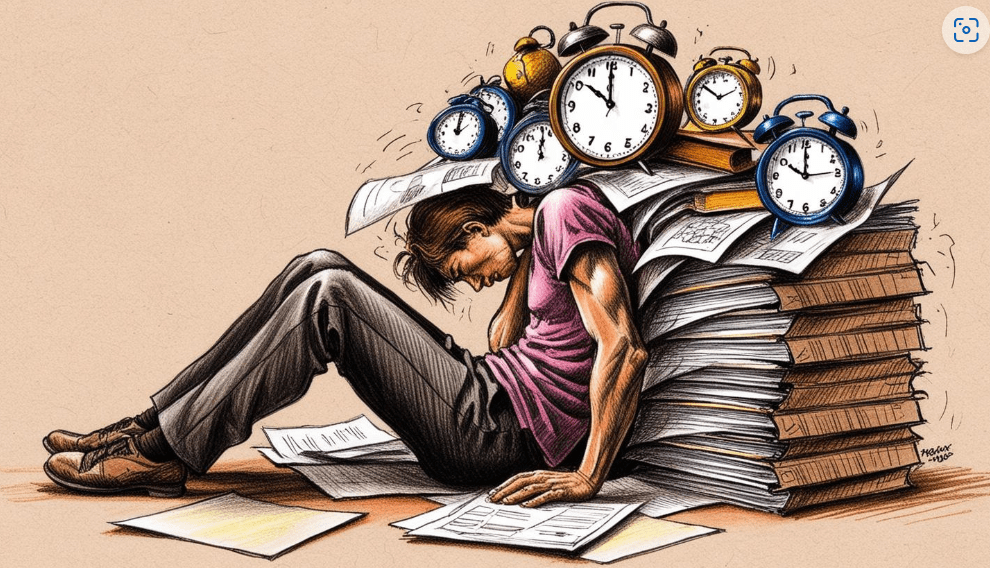
In a time when the teaching profession is experiencing a recruitment and retention crisis, improving our understanding of teacher wellbeing is an essential area of research. One of the key factors that has been identified as contributing to a decline in teacher wellbeing is intensification of workload and time pressure (Collie, 2023; McDonough & Lemon, 2024). This is an important issue to be addressed if we are to achieve the aspiration of improving wellbeing within the teaching profession. Yet in order to do this, we need the involvement of teachers. The voice of teachers in educational research, particularly in research about teacher wellbeing, is a vital and enriching factor. Collecting data from practicing teachers or, even better, including practicing teachers as co-producers of research, means that it is more likely that recommendations arising from academic findings will be feasible and practical within a school context. For example, Research-Practice Partnerships (RPP) aim to create a bridge between schools and academic research, with teachers co-constructing knowledge and negotiating meaning alongside researchers (Irgens et al, 2023). However, participating in research takes time which teachers simply do not have to spare. Studies exploring teachers’ work-related wellbeing (Green, 2021) have found that teachers are now working more intensively than previous years, as well as experiencing a decline in their task discretion and working time flexibility. Thus, we see a cycle where the intense workload contributes to a decline in teacher wellbeing, but it also creates a situation where teachers lack the time to be able to talk about their wellbeing and how it could be improved.
Shortly after the onset of the Covid-19 pandemic, I worked on a project exploring teachers’ experiences in England during the disruption to schools caused by the pandemic restrictions. Whilst excessive workload has been known to be an issue for teachers prior to this time (Ofsted, 2019), studies conducted during the pandemic found that there was both an intensification and diversification of workload occurring, leading to a decline in teacher wellbeing (Kim, Oxley & Asbury, 2022). In collaboration with colleagues, I developed an animation to share this finding in an accessible and engaging manner, using the metaphor of a ‘time gremlin’, an invisible creature eating away at teachers’ time and growing bigger and bigger. Unfortunately, the time gremlin has not disappeared along with the pandemic restrictions.
Another key finding from this project was about teachers’ experiences of student behaviour following the pandemic (Oxley, Asbury & Kim, 2023). My work on this aspect of the project led me to my current post-doctoral fellowship study with the University of York. The Building Connections study is exploring teachers’ experiences of working with students with conduct problems and Callous-Unemotional (CU) traits. These traits include low empathy, interpersonal callousness, restricted affect, and a lack of concern for performance. They typically co-occur with significant conduct problems, such as disruptive, hyperactive, or aggressive behaviours. Students with high CU traits may be more resistant to discipline strategies and have poorer teacher-student relationships (Horan et al, 2016; Viding & McCrory, 2017). The aim of my study is to identify whether working with students with conduct problems and CU traits has an impact on teacher wellbeing, but also more importantly, to highlight strategies that teacher report as being successful when working with these students, both to manage behaviour and to support their own wellbeing.
A key strand of my study involves collecting longitudinal data from teachers on measures of:
- wellbeing, including burnout symptoms of disengagement and exhaustion (Oldenburg Burnout Inventory; Halbesleben & Demerouti, 2005);
- quality of student-teacher relationships (Student-Teacher Relationship Scale; Pianta, 2001); and
- teacher perceptions of their students’ CU traits (Inventory of Callous-Unemotional Traits; Frick, 2004).
The data will be collected via short online surveys at three time points across the academic year 2024-25. Data collection is currently ongoing for the first time point, continuing until the end of February 2025. Two further surveys will collect data from the same participants during the second and third time points, taking place between March to May 2025 and from June to August 2025, respectively. The longitudinal aspect of the study will allow for exploration of any changes across time in any of these measures
The intention was to gather at least 100 responses and conduct a quantitative analysis of the data. However, I had not counted on how difficult it would be to recruit participants. Despite recruitment attempts via various channels, including social media, personal networks, and direct contact with schools, my survey study is currently at risk of under-recruitment. Early in the data collection period, one headteacher told me that teachers simply do not have time to take part in studies like this. Optimistically I carried on, but I have sadly found this assumption appears to be correct. Other headteachers responded with similar sentiments and the survey responses trickled in slowly.
Whilst writing a blog about my recruitment woes may well be cathartic, that is besides the point that I would like to make. What I am hoping to highlight here is the ironic situation of teachers’ intense working conditions, leaving them with little time to contribute to research that is trying to improve their wellbeing. As a researcher I realise that for teachers managing a diverse and heavy workload, participating in a study is going to be low on their list of priorities. But teachers’ voices are so important in educational research. Teachers need to be supported to take time to talk about their wellbeing and to contribute to research findings if they wish to do so.
When recruitment proves to be tricky, as in my current study, we need to be adaptable as researchers. Having a playful and creative mindset when thinking about how research can be conducted, as suggested by Fajardo-Tover et al (2023), is important to ensure that we can learn from the data that is available, even if it is not as we envisaged. Fajardo-Tover et al (2023) use the ‘six C’s’ framework (Golinkoff & Hirsh-Pasek, 2016) to support the development of a ‘playful mindset’ in research. The ‘six C’s’ consist of collaboration, communication, content, critical thinking, creative innovation, and confidence. For example, Fajardo-Tover et al (2023) discuss how researchers can maximise opportunities for communication and collaboration with participants, which aligns well with the idea of RPPs and co-production. In my situation, I am drawing on critical thinking and creative innovation to consider different ways to approach my study with a more limited sample of data. As such, I am planning to amend the surveys, to be completed at the second and third time points during the academic year, to ask open ended qualitative questions, with the intention to conduct a qualitative analysis instead which will work with a smaller sample. This will hopefully produce rich data, offering an insight into how teachers’ wellbeing could potentially be improved, when working with students with conduct problems and CU traits.
Whilst there are no easy answers to this ongoing and tricky issue of excessive workload in the teaching profession, it is important that researchers should continue to seek the voice of teachers in their data. Ensuring that study participation is accessible, with as low a time commitment as possible, could help teachers feel more able to take part. Sometimes this still may not be enough to enable sufficient recruitment, and in these cases, it is key for researchers to approach their studies with an adaptable and flexible mindset. Taking time to talk about teacher wellbeing continues to be an important and meaningful topic within educational research.
References
Collie, R. J. (2023). Teacher well-being and turnover intentions: Investigating the roles of job resources and job demands. British Journal of Educational Psychology, 93(3), 712-726. https://doi.org/10.1111/bjep.12587
Fajardo-Tovar, D. D., Graber, K. M., Alwani, S. E., Kirby, N., Oxley, L., Baker, S., & Ramchandani, P. (2023). Playing with change: insights and lessons from researching play during the COVID-19 pandemic. International Journal of Play, 12(2), 143–154. https://doi.org/10.1080/21594937.2023.2209237
Frick, P. J. (2004). The inventory of callous-unemotional traits. New Orleans: University of New Orleans.
Green, F. (2021). British teachers’ declining job quality: evidence from the Skills and Employment Survey. Oxford Review of Education. 47(3), 386-403. https://doi.org/10.1080/03054985.2020.1847719
Golinkoff, R. M., & Hirsh-Pasek, K. (2016). Becoming brilliant: What science tells US about raising successful children. American Psychological Association.
Halbesleben, J. R. B. & Demerouti, E. (2005). The construct validity of an alternative measure of burnout: Investigating the English translation of the Oldenburg Burnout Inventory. Work & Stress. 19(3), 208-220. https://doi.org/10.1080/02678370500340728
Horan, J. M., Brown, J. L., Jones, S. M. & Aber, J. L. (2016). The influence of conduct problems and callous-unemotional traits on academic development among youth. Journal of Youth and Adolescence. 45(6), 1245-1260. https://doi.org/10.1007/s10964-015-0349-2
Irgens, G. A., Hirsch, S., Herro, D. & Madison, M. (2023). Analyzing a teacher and researcher co-design partnership through the lens of communities of practice. Teaching and Teacher Education, 121(103952). https://doi.org/10.1016/j.tate.2022.103952
Kim, L. E., Oxley, L. & Asbury, K. (2022). “My brain feels like a browser with 100 tabs open”: A longitudinal study of teachers’ mental health and well-being during the COVID-19 pandemic. British Journal of Educational Psychology, 92(1), 299-318. https://doi.org/10.1111/bjep.12450
McDonough, S. & Lemon, N. (2024). ‘Stretched very thin’: the impact of COVID-19 on teachers’ work lives and well-being. Teachers & Teaching, 30(7/8), 1070-1082. https://doi.org/10.1080/13540602.2022.2103530
Ofsted. (2019). Teacher well-being at work in schools and further education providers. (Reference no: 190034). Ofsted. https://www.gov.uk/government/publications/teacher-well-being-at-work-in-schools-and-further-education-providers
Oxley, L., Asbury, K. & Kim. L. E. (2023). The impact of student conduct problems on teacher wellbeing following the onset of the Covid-19 pandemic: An Interpretative Phenomenological Analysis. British Educational Research Journal, 50(1), 200-217. https://doi.org/10.1002/berj.3923
Pianta, R. (2001). STRS Student-Teacher Relationship Scale. Professional Manual. Odessa: Psychological Assessment Resources Inc.
Viding, E. & McCrory, E. J. (2018). Understanding the development of psychopathy: progress and challenges. Psycholologica Medicine, 48(4), 566-577. https://doi.org/10.1017/S0033291717002847
Biography
Laura is a postdoctoral researcher affiliated with the PEDAL Centre at the Faculty of Education, University of Cambridge. Her research interests focus on mental health and wellbeing in schools, with a particular focus on collaborative approaches to managing student behaviour. She is currently working on a postdoctoral fellowship with the University of York on a study exploring teachers’ experiences of teaching students who present with conduct problems and Callous-Unemotional (CU) traits, and the potential impact of these experiences on teachers’ wellbeing. Laura can be contacted by email on lo256@cam.ac.uk.
 Cambridge Wellbeing & Inclusion SIG
It is depressing to hear how difficult it is for teachers to find time to participate in projects like this that aim to understand their experiences and ameliorate the situation. I’m glad you’ve found a way forward that enables your valuable work to continue and give voice to teachers, Laura
LikeLike