
By Nomisha Kurian
‘We shape our tools and thereafter our tools shape us.’ I haven’t been able to stop thinking about this quote from Mismatch: How Inclusion Shapes Design (Holmes, 2020). Mismatch is a powerful call to build technology that is accessible for everyone. This includes historically overlooked groups of people, such as elders, women and girls, people with disabilities, and ethnic minorities. Our tools ‘shape us’: the way that we design technology not only reflects our values as a society, but also goes on to influence who can meaningfully participate in society.
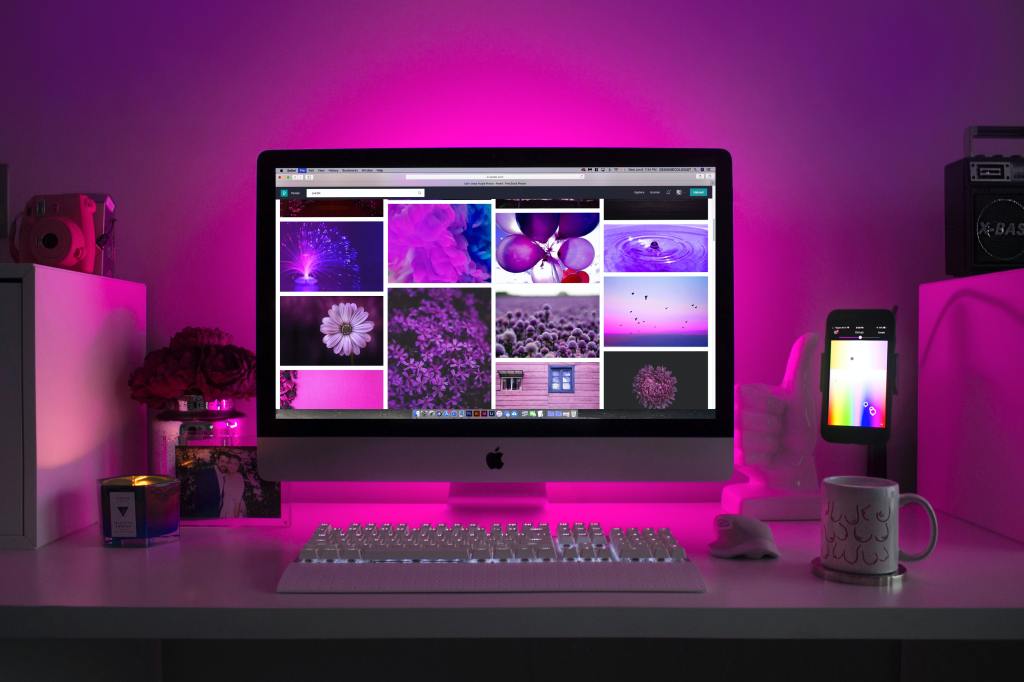
Alt-text: This image shows a laptop, a mobile device, a mug, a photograph and other household items on a desk.
This term, building on my research on child wellbeing and inclusion, I am excited to build and lead a course on the ethics of inclusive technology at our Cambridge Faculty of Education. Drawing on innovations in inclusive design, the course centres around human-centred design for wellbeing and inclusion. Students will explore the intersections between technology, human flourishing and social justice. Our case studies range from sobering (e.g. how algorithmic bias stops minority groups from getting fair mortgages) to hopeful (e.g. the world’s first XBox Controller for video-gamers with disabilities). Before diving into the world of education and child wellbeing, a range of day-to-day examples will be addressed to reflect on big-picture ethical and social questions surrounding technology: why did Microsoft’s AI chatbot become racist and sexist within less than 24 hours of being released? How has the absence of well-designed female test dummies made cars less safe for women? And – in one of my favourite examples – what happens when ninth-graders design technologies of comfort and care for seriously ill patients? Technology is reshaping the world that children will inhabit in the decades to come, and it seems harder than ever to disentangle questions of child wellbeing from the ethics of inclusive design.
The world’s largest minority
While much can be said about the social forces shaping technology, from race to gender, there will be a focus on the world’s largest minority in this article: people with disabilities. Here are 5 takeaways I’ve learned from studying disability-inclusive technology:
- Disability: a reality that can touch us all
People with disabilities make up 1.3 billion of the global population. This means that 1 in 6 people have a disability. What’s more, all people are likely to experience at least one temporary disability in their lifetime, due to illness, accidents or other unexpected events.
We also can’t forget about the loved ones surrounding people with disabilities. The Global Economics of Disability reports that friends and family add another 3.3 billion people who are deeply connected to someone with a disability.
Disability is part of being human, rather than being marginal to society. Designing inclusive technology for the world’s largest minority seems crucial.
When I look around, I’m struck by how the technology guiding our everyday lives shapes who can meaningfully participate in society. Today, as I took up the rhythms of an ordinary day – walking, reading, shopping, texting – I tried counting up the technologies around me that felt easy and effortless to use, but would have felt daunting or exhausting in different circumstances:
- Smartphones and tablets with touchscreens that are difficult to access for people with arthritis or other conditions causing limited manual dexterity.
- Online banking systems that require a government-issued ID for authentication, excluding homeless, refugee, or asylum-seeking individuals.
- E-commerce websites that use small print which is hard to read, or rely on colour to convey information, thereby excluding people with colour blindness or visual impairments.
- No braille lettering on washroom doors.
- Virtual assistants (e.g. Siri, Alexa) that rely heavily on speech recognition. People who are deaf or hard of hearing can struggle with these assistants.
- Voice-controlled smart home devices can also be too reliant on particular accents and vocal patterns; people with diverse accents or speech impairments can find themselves quite literally unheard.
- Online forms which are not accessible to screen readers and keyboard navigation, excluding people with visual impairments or mobility disabilities.
- Videos which don’t display a warning for the flash and flickering effects they use, which can be seriously threatening for people prone to seizures.
It has been sobering to realise how messages around belonging and inclusion (‘We see you’ or ‘We do not realise you are here’) become encoded into technological design. Historically, technology has not been built for those most marginalised in society; as Mismatch notes wryly, ‘Accessibility, sociology, and civil rights weren’t required curricula for learning how to build technology’ (Holmes, 2020).
- Choices of technology on offer
When we have to rely on one single technology to perform a task or service, without having multiple options in how we get the job done, a range of people can end up being left out. For example, a range of disabilities can make it difficult to use a smartphone. People with visual impairments, such as colour blindness, cataracts, or macular degeneration, might struggle to read text or recognise icons on a smartphone screen. People with motor impairments such as tremors, arthritis, or cerebral palsy may struggle to manipulate the small buttons and touch screens on a smartphone. People with hearing impairments may have trouble using the phone’s speaker or microphone to make calls or listen to audio. People with cognitive impairments such as autism, ADHD, or dementia may have difficulty navigating the phone’s interface, understanding icons, or remembering how to perform tasks. People with speech impairments such as stuttering or aphasia may struggle to voice commands or use dictation software.
What this means is that an everyday routine or task tied exclusively to a smartphone (e.g. a public transportation ticketing system that relies solely on smartphone apps) can make a whole range of users feel disoriented, confused, or frustrated.
In general, not giving people multiple options for performing a task can hamper inclusion – a particular risk in a digital era where more and more routine and mandatory tasks are taking place online. Lazar and Jaeger (2011) highlight, for example, the difficulties faced by people with disabilities if people are only allowed to file their taxes online and the tax website happens to be inaccessible. In such a situation, people with disabilities are likely to experience distress and fear, and knock-on effects such as lost time, exhausting emotional and physical labour (when trying to seek assistance), bureaucratic delays, or, at worst, financial penalties for late filing. This is just one example of exclusionary design, a much-discussed issue within disability and accessibility scholarship. We need what Dr. Nidhi Singal, a leading scholar of disability, calls a ‘deeper, more radical questioning‘ of structures that uphold exclusion.
- Transform the everyday
Despite the dominance of exclusionary design, innovations over the past decade suggest the exciting potential of technology as a force for inclusion in everyday life. In 2022, the Microsoft Inclusive Tech Lab pioneered adaptive accessories to make technology more accessible for people with limited mobility. These include a light and portable mouse, wireless replacements for traditional keyboards, and even ‘3D printed tails’ that let people with disabilities create and print customised extensions for the mouse (using a 3D printer) to meet their specific needs.
Adaptive clothing, which aims to make it easier for people with disabilities to dress themselves independently and easily, has also seen numerous innovations. In 2020, Nike received worldwide recognition for releasing their hands-free GO FlyEase shoe. Carrying forward the belief that, ‘If you have a body, you are an athlete’, the shoe lets people with mobility impairments slip it on quickly and easily with no assistance.
Another accessibility milestone comes from an unexpected source: the beauty industry, a field not typically known for inclusion. By the end of 2023, the world will have its first makeup applicator specially designed for people with limited mobility. Following the design of a line of robotic forks and spoons that help people with mobility issues eat, L’Oreal is crafting a handheld computerised makeup applicator for people who struggle to use their hands or arms. It has real-time sensors and smart motion controls that keep the lipstick upright, no matter what angle it is held at. The attachment on the end of the device is connected by magnets, and it swivels 360 degrees to stay as versatile as possible.

Courtesy L’Oreal: The world’s first inclusive makeup applicator
Alt-Text for Image: This image shows two women trying out lipstick using the L’Oreal handheld computerised makeup applicator.
We are thus experiencing unprecedented innovation in inclusive technology for everyday life. This bodes well for a future where the systemic barriers faced by people with disabilities are increasingly problematised and dismantled. Perhaps such technology will further what leading human rights scholar, Dr. Monisha Bajaj, calls our ‘transformative agency’ to work for justice.
- Balance hope and caution
While such innovations are exciting, caution and criticality is needed. Designing inclusive technology is a journey of continuous learning and evolution. No technology is a silver bullet. Let’s take the example of classrooms. Advocacy for disability-inclusive technology in education and innovations in this area are stronger than ever. Learners with disabilities often struggle to access education, due to physical and psychosocial barriers at school and difficulties in transportation. Learners with Autism, for instance, are sensitive to sound and light and can find the noise and bustle of school buses, as well as classrooms, overwhelming. By contrast, digital learning can ensconce learners with disabilities in a safe and familiar environment, if they prefer to learn from their homes. Digital access can also safeguard their access to specialised home care, as they study. Advances in inclusive technology, such as Braille accessories, hearing aid-compatible headsets, sign language software, and text-to-speech tools, also help learners communicate and work with peers.
However, so much work remains to be done to make technology genuinely inclusive. Edtech can create new barriers, even as it tries to solve deep-seated ones. The digital divide is stark. In addition, a cluster of intersectional inequalities (e.g. class, race and gender) exacerbates the struggles of people with disabilities to meaningfully access technology. Learners taking the same online learning course can have radically different experiences depending on whether they are in an urban or rural area; course notes and websites can remain inaccessible despite the efforts of disability service providers; and a classroom packed with inclusive technology might not have teachers who feel well-trained and equipped to use it.
In the face of these gaps and tensions, I find it helpful to remember that design is not a finite process or a one-stop destination. No single innovation can solve centuries of discrimination, and the complex layers of stigma and systemic inequality, that people with disabilities have faced.
What is more, the same technology can build bridges and deepen inequalities at the same time. This is why my current work draws on what Dr. Ruha Benjamin, a pioneering sociologist of technology, calls ‘the sociotechnical imaginary’ – an approach where we weave together the technical and societal implications of design and analyse how technology can be both discriminatory and liberating. Designing for inclusion is a marathon, not a sprint. It requires an unrelenting commitment to critical self-reflection. An innovation may offer a powerful step forward, but the potential for unintended consequences and exclusionary effects always looms. It might be crucial to constantly assess and reassess how technology can perpetuate existing power dynamics. Inclusive designers are lifelong learners.
- Design with, as well as for, users
Making the voices and feedback of people with disabilities key to the design process seems vital to this process of self-reflection and growth. As Mismatch puts it, inclusive design is about designing with users as well as for users (Holmes, 2020). One of my favourite case studies of innovation in inclusive technology comes from Kenya and places people with disabilities at the centre of the design process. It involves an energetic Kenyan entrepreneur called Brian Mwenda, who has founded an organisation called Hope Tech Plus Limited. This organisation seeks to build ‘walking companions’ for people with visual impairments. For example, their first invention is called ‘The Fourth Eye’, which uses echolocation to image obstacles and warn the user about obstacles through haptic feedback. Their second invention, ‘The Sixth Sense’, is a hand-held mobility device. It helps people with visual impairments to walk more independently and be aware of their environment. Brian traces his passion for inclusive technology to his experiences of attending an integrated high school and studying electrical engineering for his degree.
What I found striking about the ‘walking companions’ was not simply the technologies themselves, impressive as they were. It was the organisation’s focus on user-led design: letting the voices of people with disabilities guide their technologies. With ‘The Sixth Sense’, the entrepreneurs originally envisaged a handheld device. However, after asking people with visual impairments to test this prototype, the team found out that users preferred a more discreet device. Hence, they created a wearable device. Not only has ‘The Sixth Sense’ been well-received, but it is also the first assistive technology from Kenya set to revolutionise the way visually impaired individuals move and navigate their world.
It has been inspiring to read about entrepreneurs in underresearched contexts putting people with disabilities at the heart of design. While many organisations claim to put users first, truly human-centred design is highly challenging to put into practice. It has thus been a joy to learn about how the Kenyan team adjusted their designs iteratively, honouring the voices and input of people with disabilities.
Towards inclusion
It is fascinating how each choice in the process of technological design – from a line of code to a colour-palette – ultimately shapes a person’s experience of feeling seen and heard. A growing array of technological advancements is becoming available for people with disabilities, including mobility devices, assistive software and hardware, wearable technology, speech recognition software, and specialised input and output devices. The sophistication and reach of these innovations is sure to increase, given ever-deepening recognition of the need for a thoroughly disability-inclusive society; moreover, the global disability community is projected to grow by 130%, from 1.5 billion to 3.5 billion people, by 2050, due to an ageing population and the rising incidence of non-communicable diseases.
However, there is still so much work to be done, since disability-inclusive design has historically not been prioritised in our day-to-day environments. As Mismatch puts it, ‘Every human interaction that includes technology gains a wild card: who will it reject and who will it accept?’ (Holmes, 2020). Since designing technology that makes people feel seen and heard is a complex and ever-evolving task, it seems fitting to imagine our journey towards inclusive design as one of lifelong learning.
Recommended sources
For those interested in exploring the future of inclusive technology and the rights of those with disabilities, I recommend the following resources:
Global Disability Innovation Hub: https://www.disabilityinnovation.com/
International Council of Design. Designing Access. Retrieved from https://www.theicod.org/resources/news-archive/designing-access
Inclusive City Maker. Creating an Accessible and Barrier-Free Society Through Inclusive Design: a Constant Renewal. Retrieved from https://www.inclusivecitymaker.com/creating-accessible-society-inclusive-design/
The University of Cambridge Inclusive Design Toolkit: http://www.inclusivedesigntoolkit.com/
Pathbreaking experts in the fields of disability, human rights, and/or technology for inclusion: Dr. Nidhi Singal, Dr. Monisha Bajaj, Dr. Ruha Benjamin, Dr. Mark Friedman, Dr. Hironobu Takagi
References
Holmes, K. (2020). Mismatch: How inclusion shapes design. Mit Press.
Lazar, J., & Jaeger, P. (2011). Reducing barriers to online access for people with disabilities. Issues in Science and Technology, 27(2), 69.
Biography: Nomisha Kurian is a Teaching Associate at the Faculty of Education, University of Cambridge. She is currently researching the role of human-centred design in building empathy-driven technology and spoke at the 2022 UNESCO Forum on Artificial Intelligence and Education. She recently became the first Education researcher to win the Cambridge Applied Research Award for her work to widen participation in higher education. Her research has most recently been published in the Oxford Review of Education, the British Educational Research Journal, and the Journal of Pastoral Care in Education. Her forthcoming publications examine the role of digital storytelling, Artificial Intelligence, and gaming technology in supporting learners from all backgrounds. Please feel welcome to connect with her here.
 Cambridge Wellbeing & Inclusion SIG
What a thought provoking and inspiring blog, Nomi. You remind us of the importance of this issue and the need for all of us to be reflexive and empathetic. I don’t know if you’ve talked to Bill Nichol about his work in the area of inclusive design?
LikeLike